
What Is a Key Exit Alert System and Why Do You Need One?
A maintenance technician finishes a repair on Friday afternoon, slips the building’s master keys into a jacket pocket and heads home. Two hours later, a pipe starts leaking. The evening supervisor checks the sign-out sheet and knows exactly who has the keys. Unfortunately, the person on the other end of the phone is already sitting down to dinner.
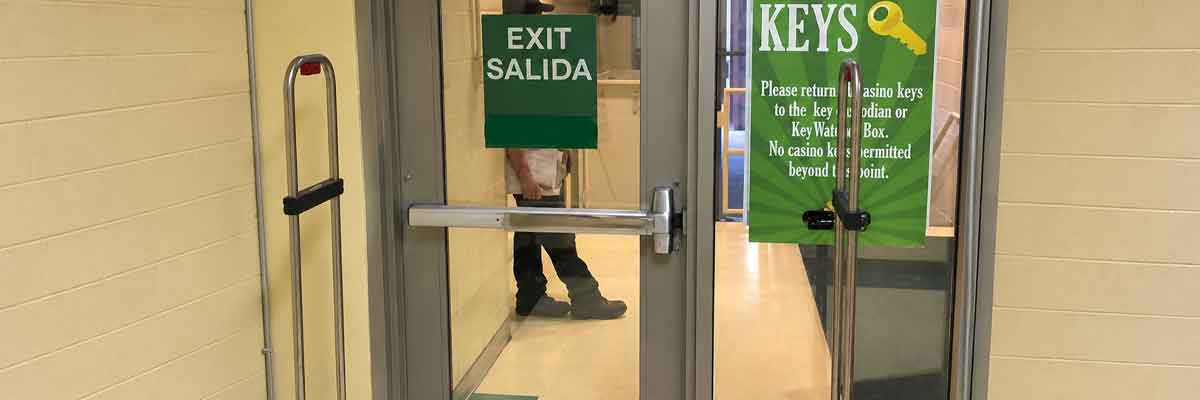
A key exit alert system gives the technician a chance to catch that mistake at the staff door. When a tagged key enters the detection area at a monitored exit, an alarm sounds. The technician can turn around, hang up the keys and get on with the weekend. The evening shift can get into the mechanical room when it matters.

How Does a Key Exit Alert System Work?
The Alert-Pro RF Key Exit Detection System uses radio frequency (RF) technology to detect designated keys near a doorway. Here’s what that looks like during a shift.
1. Tag the Keys That Should Stay On-Site
Attach a compatible RF fob to each key ring you want to protect. A hotel might tag the master sets issued to housekeeping and maintenance. A dealership might tag the spare keys kept in the sales office while leaving the regular test-drive sets available for trips onto the lot. For example, the University of Alberta’s key control procedure requires master keys to be secured on-site at the end of a shift unless staff have authorization to take them elsewhere.
2. Monitor the Door Staff Actually Use
Detection panels cover the selected doorway. A front entrance might look like the obvious choice on a floor plan, but ask the closing crew where they park. If everyone clocks out beside the loading bay and leaves through the side door, that exit deserves a closer look.
3. Respond When the Alert Sounds
When a tagged ring enters the detection area, an audible alarm alerts the person carrying it and staff nearby. Agree in advance on who will respond and where keys should be returned. At a hotel, that might mean handing the ring back to the duty manager so it is ready for the next shift.
Why a Missing Key Can Cost More Than a Replacement
At a dealership, a customer may be standing at the service counter with a paid invoice and a clear view of their vehicle through the window. If the only available key went home in a technician’s pocket, the service advisor still can’t hand over the car. Someone has to reach the technician, arrange the return and explain the wait to the customer.
For a property manager, the harder question is what the missing key opens. A master ring may give access to tenant units, storage rooms and building services. If the manager can’t account for it, they have to work out which doors are affected and whether any locks need to be rekeyed. An alert at the staff exit gives the team a chance to recover that ring while they can still see who is carrying it.
At Athabasca University, the cost can come directly out of a department’s budget. Under its issuance of keys policy, the department pays when a missing key makes rekeying necessary
How Exit Alerts Fit With a Traka 21 Key Cabinet
A key cabinet and an exit alert answer two different questions. At the cabinet, you want to know, “Who took the master keys?” At the staff door, you want to know, “Are those keys about to leave the building?”
The Traka 21 key management system controls access to up to 21 keys or key sets and records key activity. An employee can have every reason to take a key from the cabinet at 9 a.m. and still forget to return it at 5 p.m. Alert-Pro covers that second moment. It can also operate on its own if your team uses a mechanical cabinet, key board or sign-out sheet.
Does Your Facility Need a Key Exit Alert System?
Think about the last time a set of keys went home with someone. Which door did they use? How long was it before anyone noticed? What had to wait until the keys came back? Those answers will tell you more about the value of an exit alert than the total number of keys on your board.
A good starting point is one ring that must stay on-site, one doorway it regularly passes and someone close enough to respond. To discuss coverage for your facility, call 1-877-460-9602 or contact Track A Key Systems.
frequently asked questions
Will an employee’s personal keys trigger the alarm?
The detector responds to a compatible RF tag. An ordinary untagged house key or car key can pass through the doorway without triggering a key alert.
Can we keep using our existing key cabinet?
Yes. Alert-Pro can operate as a standalone system alongside your existing cabinet. You can keep your current sign-out procedure and add detection at the exit where keys tend to leave.
Can the system locate a key after it leaves the property?
Alert-Pro detects a tagged key within range of the installed panels. Once the key moves beyond that area, the system cannot tell you where it went. That’s why it helps to have someone nearby who knows what to do when the alarm sounds.
What if our building has several exits?
Coverage depends on where panels are installed. If a tagged ring can leave through either the staff entrance or the loading bay, include both routes in your assessment. Doorway width also matters when choosing the panel configuration.